Foundation Crack Repair in Winnipeg: When to Worry and When It's Cosmetic.
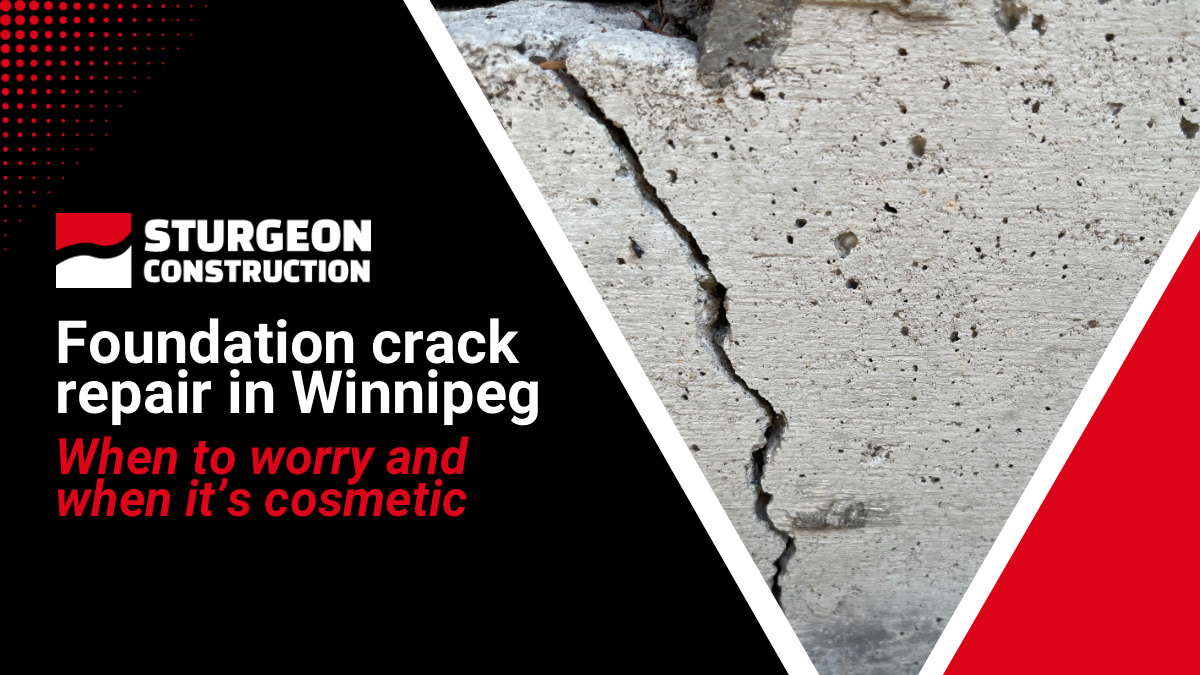
Finding a crack in your basement foundation can be unsettling. You may notice a thin line running through the concrete wall and immediately start wondering, "Is this normal, or is my foundation failing?"
The truth is that not every foundation crack means your home has a serious structural problem. Some cracks are relatively minor and may be related to normal concrete shrinkage. Others can indicate water intrusion, soil movement, settlement, or structural issues that should be addressed by a foundation repair professional.
For homeowners in Winnipeg and surrounding Manitoba communities, understanding the difference is particularly important. Manitoba's clay-heavy soils, changing moisture levels, and repeated freeze-thaw cycles can place significant stress on residential foundations.
So, when should you worry about a foundation crack?
The answer depends on more than just how big the crack looks.
Are Foundation Cracks Normal?
Some foundation cracking is common in concrete foundations.
Concrete naturally shrinks as it cures and changes over time. This can result in small, hairline cracks that remain stable and do not cause structural problems.
However, the location, direction, width, and progression of a crack can provide important clues about what's happening to your foundation.
A small vertical crack that has remained unchanged for years is generally less concerning than a horizontal crack that appears to be growing or is accompanied by a bowing basement wall.
This is why homeowners should avoid judging a foundation problem based solely on the size of the crack.
Hairline Foundation Cracks: Should You Be Concerned?
Hairline cracks are among the most common types of foundation cracks.
These very thin cracks can occur as concrete cures and shrinks. If the crack is small, stable, and not allowing water into the basement, it may be primarily cosmetic.
However, it's still worth keeping an eye on it.
If a hairline crack becomes wider over time, begins allowing water into your basement, or is accompanied by other signs of foundation movement, it should be professionally assessed.
Taking a photograph of the crack and periodically checking whether it has changed can also help you identify whether the problem is progressing.
Vertical Foundation Cracks
Vertical cracks are often found in poured concrete foundation walls.
A narrow vertical crack may be caused by normal concrete shrinkage, particularly if the foundation is otherwise stable. However, vertical cracks can also be associated with settlement or other foundation movement.
The important question is whether the crack is changing.
If you notice the crack getting wider, extending further along the wall, allowing water to enter, or appearing alongside other cracks, it is worth having a professional inspect it.
A foundation specialist can determine whether the crack is simply a concrete issue or whether there is an underlying problem that needs to be addressed.
Horizontal Foundation Cracks Can Be More Serious
Horizontal cracks deserve particular attention.
Unlike many small vertical cracks, horizontal cracking can sometimes indicate that pressure is being exerted against the foundation wall from the surrounding soil.
When soil becomes saturated, it can place additional pressure against basement walls. In Winnipeg, seasonal moisture changes and the characteristics of local soils can contribute to these pressures.
A horizontal crack can be particularly concerning when it is accompanied by a wall that appears to be bowing, leaning, or bulging inward.
If you notice a horizontal crack in your basement wall, don't simply fill it and assume the problem is solved. Have the foundation evaluated to determine what's causing the pressure.
What About Stair-Step Cracks?
Stair-step cracks typically appear in masonry or concrete block foundations and follow the mortar joints in a pattern resembling a staircase.
These cracks can sometimes be associated with differential settlement, where one portion of the foundation moves differently from another.
A stair-step crack doesn't automatically mean your home is experiencing major structural failure, but it deserves attention, particularly if it is growing, extending from the foundation toward the upper portions of the home, or accompanied by other signs of movement.
Homeowners should also look for related symptoms such as doors that suddenly stick, uneven floors, gaps around windows or doors, or cracks appearing in other parts of the home.
Foundation Cracks and Water Leaks
One of the easiest warning signs to identify is water.
If water is entering through a foundation crack, the issue isn't simply cosmetic anymore.
Water entering through a foundation crack can contribute to damp basement conditions, damage finished spaces, encourage mold growth, and create ongoing moisture problems.
Even a relatively small crack can allow groundwater to enter when the soil around your foundation becomes saturated following heavy rain or snowmelt.
If your foundation crack is leaking, it's important to determine why water is reaching the foundation in the first place.
Simply sealing the inside of the crack may not address the source of the water.
When Is a Foundation Crack Cosmetic?
A crack is more likely to be cosmetic when it is:
Small and relatively narrow, stable over time, not associated with water intrusion, and not accompanied by signs of foundation movement.
For example, a small hairline crack that appeared after a foundation was poured and has remained unchanged may simply be the result of normal concrete shrinkage.
However, homeowners should be careful about making this determination themselves.
A crack that looks harmless may have a different cause when viewed in the context of the rest of the foundation.
When you're unsure, an inspection can provide much more certainty than trying to diagnose the problem from an online photo.
When Should You Call a Foundation Repair Professional?
You should consider having a foundation professional inspect the crack if you notice it getting larger, water entering through the crack, horizontal cracking, stair-step cracking, multiple cracks developing in the same area, a bowing or leaning foundation wall, or other signs of settlement.
You should also seek professional advice if you're unsure whether a crack is structural.
Foundation problems are much easier to address when they're identified early.
An inspection doesn't necessarily mean you'll need an expensive repair. In many cases, the purpose of an inspection is simply to determine what's happening and whether action is necessary.
Get a Free Foundation Inspection in Winnipeg
Sturgeon Construction helps homeowners throughout Winnipeg and surrounding Manitoba communities identify and repair foundation problems, including foundation cracks, basement leaks, structural movement, settlement, and waterproofing issues.
If you've discovered a crack in your basement foundation and aren't sure whether it's cosmetic or something more serious, don't guess.
Contact Sturgeon Construction to schedule a free foundation inspection and estimate. Their experienced team can assess the crack, identify potential causes, explain your options, and recommend the appropriate repair if one is required.
The sooner you understand what's happening with your foundation, the easier it is to make an informed decision about protecting your home.


